A specification is only worth what the last container matched. Every lot is checked against the agreed numbers, recorded, and documented — so what you approve in a sample is what arrives at your port.
Charcoal is bought on four or five parameters, and every one of them can be quietly let go on a busy month. We write them into the contract, test against them per lot, and put the result in writing before the container is booked.
Ranges below are the working bands for our standard hardwood grades. Your own specification takes precedence — if you need a tighter band, we quote against it or tell you honestly that we cannot hold it.
INDICATIVE BANDS FOR STANDARD HARDWOOD GRADES · FINAL FIGURES CONFIRMED ON THE CONTRACT SPECIFICATION SHEET.
Quality control sits inside production, not after it. Each checkpoint has a sign-off and a record that stays with the lot number.
Species, dryness and cleanliness checked at the gate. Mixed or wet loads are turned away rather than blended into a batch.
Load time, temperature curve and closing time written up per kiln, so an off-spec batch can be traced back to its burn.
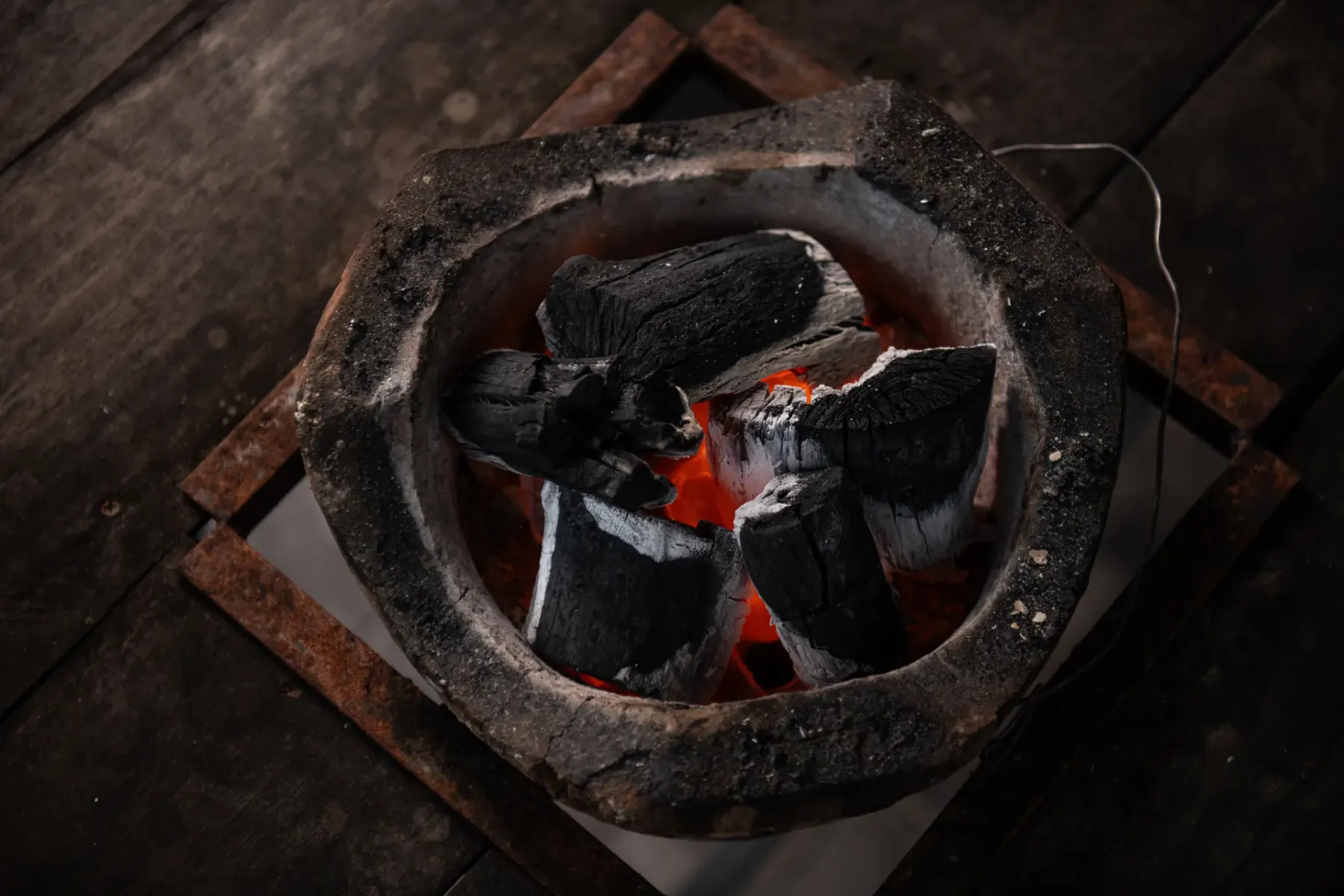
No kiln is opened before its cooling time is complete and the temperature is confirmed. This is the check that prevents reignition at sea.
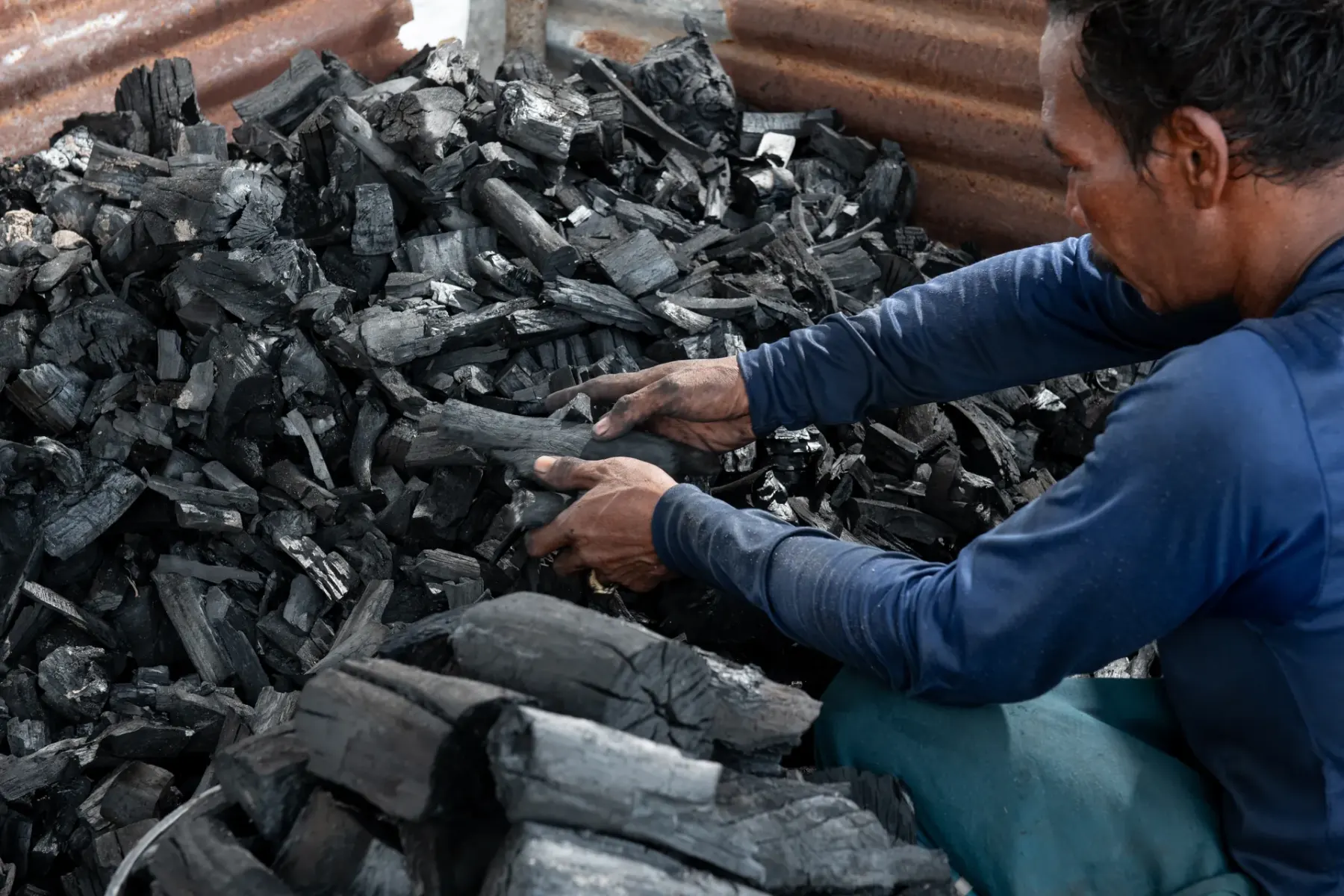
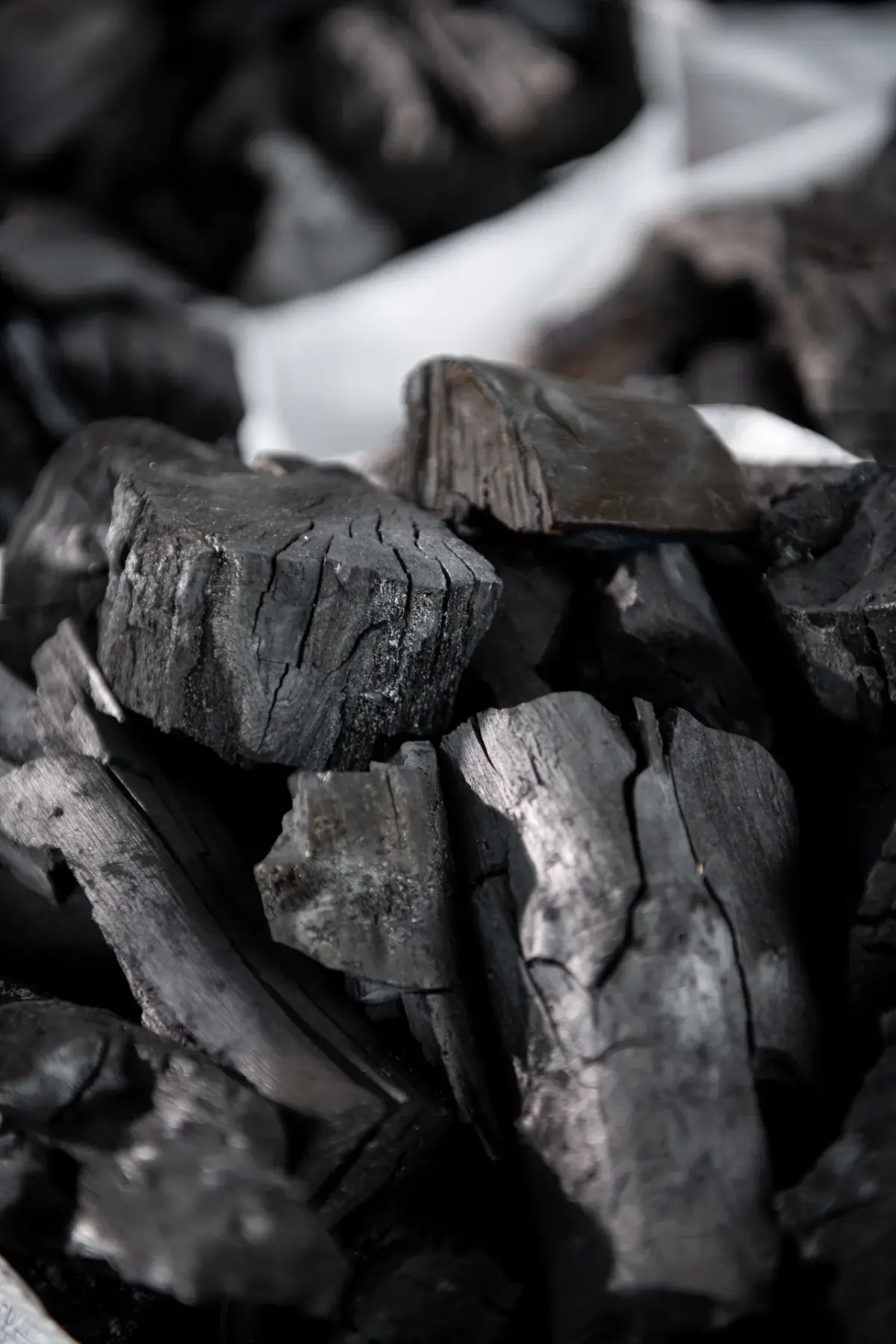
A sample is drawn at sorting and compared against the reference pieces for the grade — size, hardness, unburnt cores.
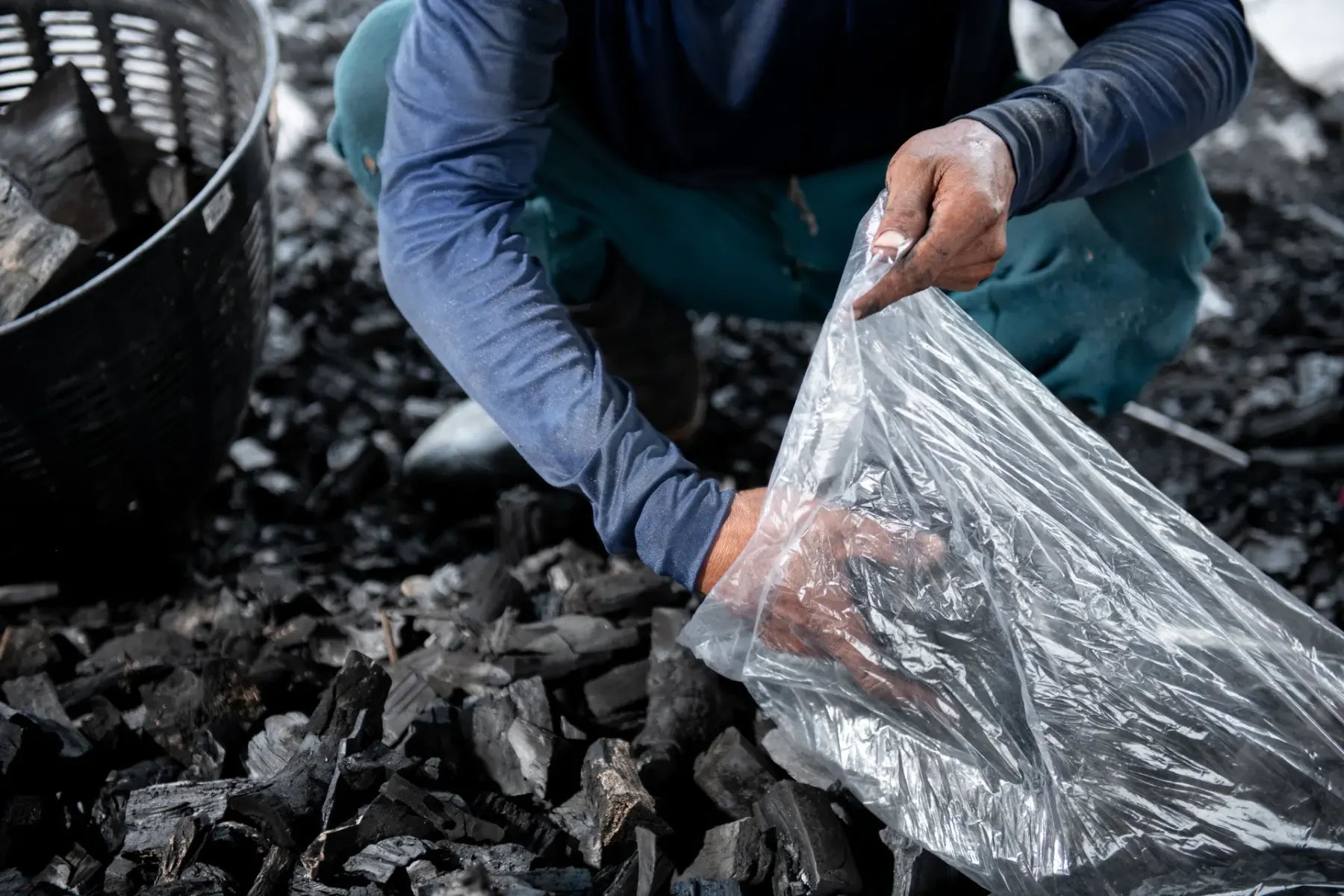
Fines, soil, bark and stray debris screened out before bagging. What reaches the bag is charcoal, not the weight of what came with it.
Moisture re-tested on the line, net weight verified, seals and lot marks checked — because charcoal that sat through a humid week is not the charcoal that left the kiln.
Weights, lot marks, pallet counts and container condition confirmed and photographed as the box is stuffed and sealed.
In-house checks catch problems early; independent analysis is what your buyer, your customs broker and your retail partner will actually accept. We arrange third-party testing per contract and issue the documents with the shipment, not weeks after it.
Full export document set →Requirements differ by destination. Tell us the market and we will confirm in writing what we can supply for it.
Plantation and residue feedstock logged by supplier and load, so origin questions have an answer on file.
SDS and handling guidance for storage, road transport and sea freight of charcoal products.
Bag artwork adapted to the declarations your market requires, checked before the print run.
Your inspector or agency is welcome at the factory and at the point of loading, with records made available.
Most suppliers are judged on how they behave when something goes wrong. Our position is simple: sample first, document every lot, and settle claims against the retained sample rather than argue about them.
Ask for a sample →A complaint is data. Every one is logged against its lot and closed with a change, not an apology.
Every claim, photo and comment from a buyer is recorded against the lot number it refers to, not filed in an inbox.
We work back through the kiln log, grading sample and packing record until the cause is identified rather than guessed at.
The fix is written into the checkpoint that missed it, so the next batch is caught by procedure and not by attention.
We tell the buyer what changed and check the next container against the same point before it loads.
IMPROVEMENT RECORDS ARE AVAILABLE TO BUYERS ON REQUEST FOR THEIR OWN LOTS.
Share the parameters you buy on and the market you sell into. We will come back with a sample, a test report and a straight answer on what we can hold.